Common Electrical Failures and What They Teach
Common Electrical Failures and What They Teach
Failures don’t punish engineers. They educate them.
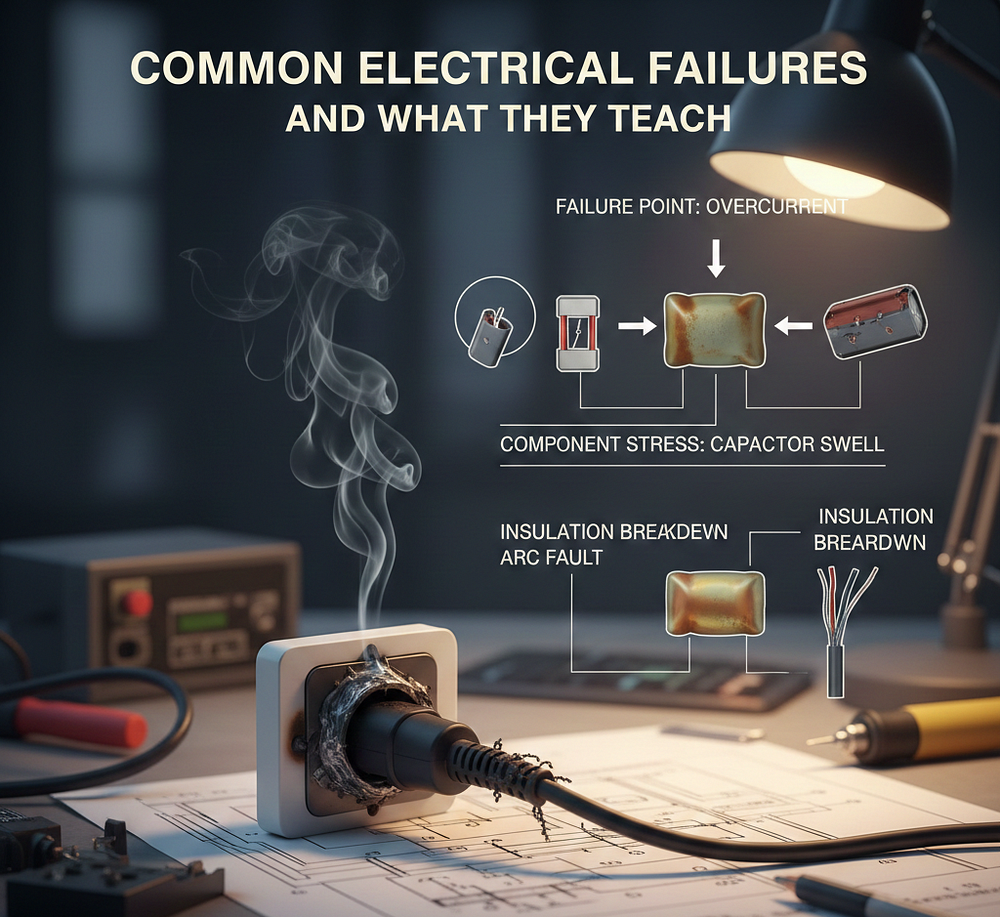
In rover engineering, electrical failures are often viewed as setbacks. Something stops responding, data goes missing, or a system behaves unpredictably. The first reaction is usually frustration.
At NASA HERC, experience changes that perspective.
Electrical failures are not signs of incompetence. They are signals. When approached correctly, they become some of the most valuable learning moments in the entire engineering process.
Why Electrical Failures Are Common
Electrical systems operate at the intersection of power, motion, and control. They respond instantly to change and are affected by load, vibration, and operating conditions.
Unlike mechanical failures, which often develop gradually, electrical issues can appear suddenly. This makes them feel more serious, even when they are not.
NASA HERC exposes teams to real operating conditions, where small oversights quickly become visible. That exposure is intentional.
Failures Reveal System Interactions
Many electrical issues are not caused by a single mistake.
They emerge from interactions between systems. A change in load affects behaviour. Movement introduces vibration. Temperature influences performance. These interactions are difficult to predict fully during planning.
Failures highlight where assumptions break down. They show how systems actually interact, not how they were expected to.
Understanding these interactions is a critical step toward better design.
Intermittent Issues Are the Best Teachers
Intermittent electrical failures are often the most frustrating.
A system works once, fails the next time, then works again. These moments force teams to slow down and observe patterns rather than jumping to conclusions.
NASA HERC teaches teams to look for consistency over time. Intermittent issues often reveal deeper questions about reliability, routing, or system stress.
They teach patience and methodical thinking.
What Testing Teaches Through FailureTesting creates a controlled environment where failures can be observed safely.
Instead of reacting emotionally, teams learn to treat failures as data points. What changed? When did behaviour shift? What conditions were present?
This analytical approach transforms failure into feedback. It removes blame and replaces it with understanding.
NASA HERC rewards teams that learn from testing instead of fearing it.
Failures Improve Safety Awareness
Electrical failures often strengthen safety thinking.
They highlight why protection, insulation, and thoughtful planning matter. When teams see how small issues can escalate, safety stops feeling theoretical.
This shift is important. Engineers begin designing not only for success, but also for safe failure.
NASA values this mindset because it reflects real engineering responsibility.
Learning to Diagnose, Not Guess
One of the most important lessons electrical failures teach is discipline.
Guessing leads to temporary fixes. Diagnosis leads to understanding. Teams learn to observe behaviour carefully, trace patterns, and test changes one at a time.
This methodical approach reduces recurring issues and builds confidence over time.
Good engineers do not rush to fix. They pause to understand.
Failures Strengthen Team Communication
Electrical issues often involve more than one perspective.
Diagnosing them requires discussion, shared observation, and clarity. Teams that communicate openly during failures learn faster and respond more effectively.
NASA HERC highlights the importance of shared problem-solving. It shows that engineering progress depends on collaboration, not individual blame.
Failures improve teamwork when handled constructively.
Why Blame Slows Engineering Growth
Blame focuses attention backward.
Learning-focused teams look forward. They ask what the system is teaching them instead of who made a mistake. This mindset creates psychological safety, which encourages honesty and curiosity.
NASA HERC environments reward teams that handle problems with maturity and openness.
Engineering improves fastest when failure is treated as feedback, not fault.
Team Mushak’s Perspective
For Team Mushak, electrical failures have been some of our strongest teachers. Each unexpected behaviour helped us understand our system more deeply.
These lessons now inform how we plan, test, and design moving forward.
Failure did not weaken our process. It refined it.
Electrical failures are uncomfortable, but they are honest.
They reveal how systems truly behave, not how we hoped they would. When teams listen carefully, failure becomes one of the most effective instructors in engineering.
NASA HERC reminds us that progress does not come from avoiding failure.
It comes from learning responsibly when failure occurs.
This is Team Mushak.
Learning through challenges.
Building through iteration.
And preparing, one step at a time, for NASA HERC 2026
TO SEE OUR JOURNEY YOU GUYS CAN STAY TUNED WITH US ON
1. YouTube: https://youtube.com/@teammushak?si=pyRJ3G6mEWIp_YXz
2. Instagram: https://www.instagram.com/teammushak?igsh=cDBmYmZxdGoyZGwz
3. LinkedIn: linkedin.com/in/team-mushak


Comments
Post a Comment