Engineering Beyond the Rover: What NASA HERC Really Evaluates
Engineering Beyond the Rover: What NASA HERC Really Evaluates
Because building the rover is not the only part of the challenge.
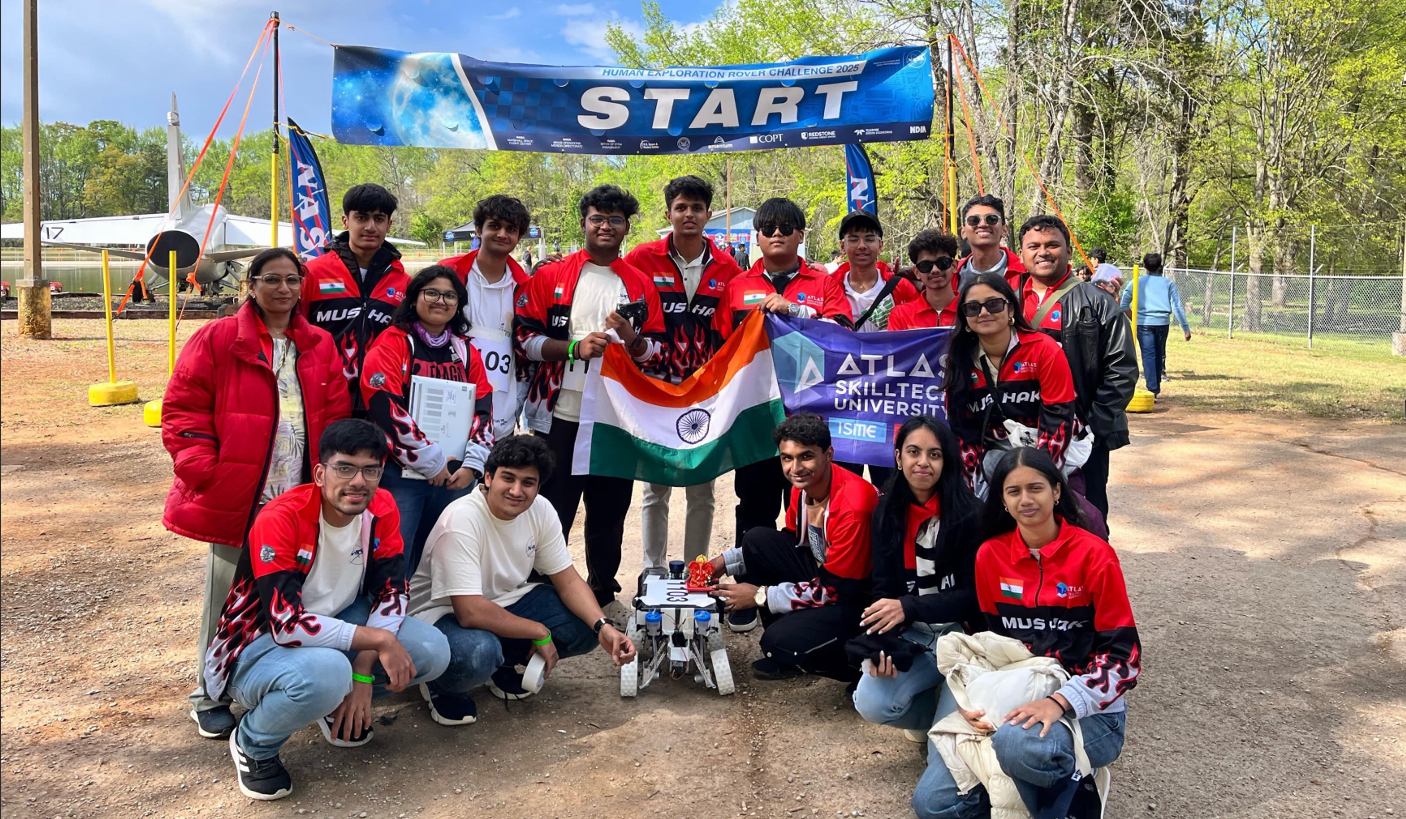
When people think about NASA HERC, they usually picture a rover driving over obstacles or performing tasks on a challenging course. While that is the most visible part of the competition, it is far from the whole story.
NASA HERC evaluates much more than how a rover moves. It evaluates how a team thinks, plans, communicates, and takes responsibility for its work. In many ways, what happens off the field matters just as much as what happens on it.
Documentation as a Measure of Understanding
One of the strongest indicators of engineering maturity at NASA HERC is documentation.
Design reports, operational explanations, and safety reviews are not formalities. They are tools that show whether a team truly understands its system. Writing forces clarity. If a team cannot explain why a decision was made, it often means the decision was never fully thought through.
At NASA HERC, documentation reflects intent. It shows planning, awareness of risks, and understanding of trade-offs. Clear documentation also demonstrates that the team can communicate technical ideas in an organised and professional manner, which is essential in real engineering environments.
Engineering is not complete until it can be explained.
Safety Is Treated as an Engineering Requirement
Safety at NASA HERC is not about avoiding penalties. It is about responsibility.
Teams are expected to think about safety from the beginning of the design process. Electrical protection, mechanical stability, secure mounting, operational procedures, and emergency planning are all considered part of engineering work.
NASA evaluates how well teams anticipate failure scenarios and plan for them. This includes understanding what could go wrong and how risks are reduced through design and procedures.
By treating safety as a design input rather than an afterthought, teams learn one of the most important lessons in engineering. Good engineering protects people as much as it delivers performance.
Teamwork Shapes Outcomes
NASA HERC is not designed to be an individual challenge. It is intentionally structured to test how teams work together.
Clear role distribution, communication between members, and coordinated decision making all influence how smoothly a team operates. When challenges arise, the way a team responds often reflects its internal organisation.
Strong teamwork shows up in quiet ways. Tasks are completed on time. Decisions are communicated clearly. Problems are addressed collaboratively instead of reactively.
NASA HERC recognises that engineering is rarely a solo effort. It is a collective process that depends on people working together effectively.
Planning Defines Readiness
Another critical area NASA HERC evaluates is planning.
This includes timeline management, task sequencing, review preparation, and readiness checks. A well built rover without a clear operational plan is unlikely to perform consistently.
Planning shows foresight. It reflects whether a team understands the complexity of the competition and prepares accordingly. Good plans are flexible. They account for uncertainty and leave room for adjustment.
Through planning, teams learn to think beyond the immediate task and consider the bigger picture.
Consistency Matters More Than Moments
At NASA HERC, evaluation happens across multiple dimensions. A single good run does not define a team. Consistency does.
Documentation quality, safety awareness, team coordination, and preparation all contribute to a team’s overall performance. These factors are observed over time rather than in isolated moments.
This approach rewards teams that take the competition seriously as a process, not just as an event.
Why This Broader Evaluation Matters
NASA HERC reflects how real engineering projects are assessed. Engineers are not judged only by what they build, but by how they plan, communicate, document, and operate.
By evaluating these aspects, NASA HERC prepares students for professional environments where accountability and clarity matter as much as technical skill.
The competition teaches that engineering is a responsibility, not just a technical achievement.
Team Mushak’s Perspective
For Team Mushak, understanding this broader evaluation has shaped how we approach NASA HERC. We’ve learned that effort invested in planning, documentation, and teamwork directly strengthens technical outcomes.
These elements help us work with confidence and clarity. They remind us that engineering is as much about people and processes as it is about systems.
Looking Ahead!
NASA HERC evaluates the whole engineer, not just the machine.
As Team Mushak prepares for NASA HERC 2026, we continue to treat documentation, safety, teamwork, and planning as core parts of our engineering process.
This is Team Mushak.
Learning through challenges.
Building through iteration.
And preparing, one step at a time, for NASA HERC 2026
TO SEE OUR JOURNEY YOU GUYS CAN STAY TUNED WITH US ON
1. YouTube: https://youtube.com/@teammushak?si=pyRJ3G6mEWIp_YXz
2. Instagram: https://www.instagram.com/teammushak?igsh=cDBmYmZxdGoyZGwz
3. LinkedIn: linkedin.com/in/team-mushak
4. Twitter https://x.com/mushak_herc


Comments
Post a Comment