Structure, Strength, and Weight Balance
Structure, Strength, and Weight Balance
Strong enough to survive. Light enough to perform.
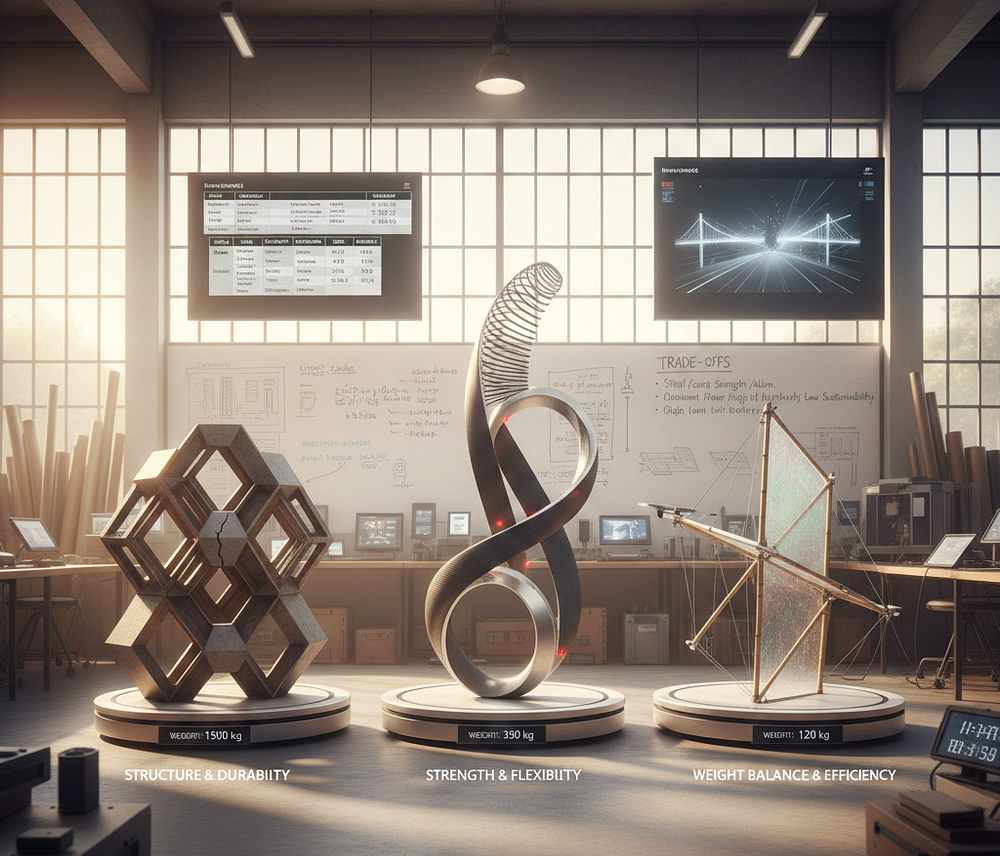
In the NASA Human Exploration Rover Challenge RC Division, a rover’s structure does far more than hold components together. It defines how forces move through the system, how weight is distributed, and how efficiently the rover responds to terrain.
Structural design is not about building the strongest possible frame. It is about finding the right balance between strength, weight, and functionality within strict constraints.
Why Structure Is the Rover’s Foundation
The structural frame is the rover’s backbone.
Every subsystem depends on it. Wheels transmit forces through it. Suspension reactions pass through it. Electrical and control systems rely on it for protection and stability.
If the structure flexes unpredictably or concentrates stress in the wrong places, the entire rover suffers. Even well-designed subsystems struggle when the structure cannot support them consistently.
At NASA HERC, structural reliability is evaluated not just by appearance, but by how the rover behaves under load and motion.
Material Choice Is a Design Decision, Not a Shortcut
Material selection shapes nearly every structural outcome.
Each material brings trade-offs. Strength, stiffness, weight, ease of fabrication, and durability must all be considered together. Choosing a material because it is strong or familiar is rarely sufficient.
Lightweight materials reduce energy demand and improve maneuverability. Stronger materials improve durability but may add unnecessary mass. The challenge lies in selecting materials that serve the rover’s purpose rather than overpower it.
In NASA HERC, material decisions reveal how well teams understand engineering compromise.
Strength Without Strategy Becomes a Liability
Overbuilding is a common temptation.
Thicker members and heavier reinforcements may feel safer, but they often introduce problems elsewhere. Added weight increases load on the drive system, affects stability, and shifts the center of mass.
A structurally strong rover that struggles to move efficiently is not truly strong.
Effective design places strength only where it is needed. Understanding load paths helps teams reinforce critical areas while keeping the rest of the structure efficient.
Strength must be intentional.
Weight Balance Shapes Rover Behavior
Where weight is placed matters as much as how much there is.
An unbalanced structure can compromise traction, turning response, and stability on slopes. Poor weight distribution increases rollover risk and places uneven stress on components.
Structural design influences weight balance through component placement and frame geometry. Thoughtful layout helps keep the center of mass predictable and controlled.
At NASA HERC, balanced rovers feel calmer, more controllable, and more reliable during runs.
Designing for Real Forces, Not Ideal Conditions
Structural systems experience more than static loads.
They handle vibration, sudden impacts, and repeated stress during testing and competition. Real terrain introduces unpredictable forces that challenge ideal assumptions.
Designing for these conditions means anticipating movement and flexibility rather than assuming perfect alignment. Structural reliability comes from accommodating reality, not resisting it completely.
NASA HERC values structures that survive repeated use without gradual degradation.
Iteration Refines Structural Decisions
Structural design rarely stays fixed.
Testing reveals weak points, stress concentrations, or inefficiencies. These observations inform refinements rather than complete redesigns.
Iteration helps teams understand how much strength is enough and where weight can be reduced safely. Over time, structures become lighter, more efficient, and more reliable.
This evolution reflects learning rather than correction.
Team Mushak’s Approach
For Team Mushak, structural design starts with understanding load behavior and system interaction. We focus on placing strength where it serves purpose and reducing weight where it adds little value.
Our goal is not to build the heaviest structure, but the most effective one.
In NASA HERC, a rover’s structure tells a quiet story.
It reveals how a team understands balance, compromise, and responsibility. Strength supports performance, but balance sustains it.
Good structural design does not demand attention.
It earns trust.
This is Team Mushak.
Learning through challenges.
Building through iteration.
And preparing, one step at a time, for NASA HERC 2026
TO SEE OUR JOURNEY YOU GUYS CAN STAY TUNED WITH US ON
1. YouTube: https://youtube.com/@teammushak?si=pyRJ3G6mEWIp_YXz
2. Instagram: https://www.instagram.com/teammushak?igsh=cDBmYmZxdGoyZGwz
3. LinkedIn: linkedin.com/in/team-mushak
4. Twitter: https://x.com/mushak_herc
5. Blogger: https://teammushak.blogspot.com/2026/01/the-vision-behind-team-mushak.html
6.Medium: https://medium.com/@team.mushak/key-design-lessons-from-nasa-herc-2025-6a7c83a2ee73


Comments
Post a Comment