The Role of Electrical Systems in an RC Rover
The Role of Electrical Systems in an RC Rover
When the electronics work quietly, the rover works confidently.
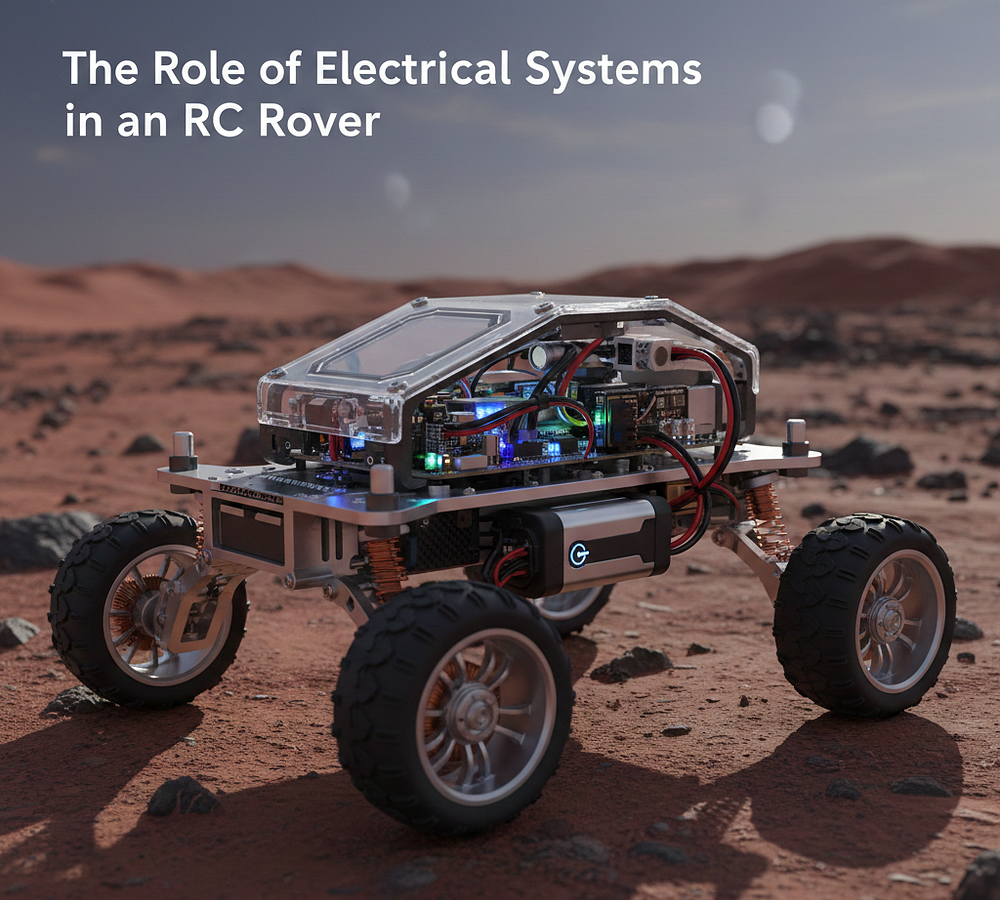
In a remotely operated rover, electrical systems are rarely the most visible part. They do not define the shape, and they are not always obvious during motion. Yet they quietly influence almost every aspect of performance.
At NASA HERC, electrical systems are not just about power or control. They form the backbone that connects design intent to real-world behaviour.
More Than Wires and Components
It is easy to think of electrical systems as a collection of wires, batteries, and controllers. In reality, they are about coordination.
Electrical systems manage how energy is delivered, how signals are interpreted, and how different parts of the rover communicate. They ensure that actions happen when expected and stop when they should.
In an RC rover, this coordination must remain consistent under changing conditions. That reliability is what makes the system usable.
Power as a Design Influence, Power distribution shapes many design decisions.
How energy is stored, routed, and protected affects layout, weight balance, and accessibility. Electrical systems influence where components can be placed and how easily the rover can be maintained.
Power is not unlimited. Managing it thoughtfully forces prioritisation. Designers must decide where energy is most critical and how to avoid unnecessary losses.
At NASA HERC, these decisions reflect how well a team understands system-level design.
Control and Predictability
Control systems translate human input into mechanical action.
Electrical interfaces ensure that commands are delivered accurately and consistently. Small delays, noise, or instability in control signals can affect how the rover feels to operate.
Predictable control behaviour builds operator confidence. It allows smoother navigation and reduces cognitive load during complex manoeuvres.
Good electrical design supports calm operation, even under pressure.
Integration With Mechanical Systems, Electrical and mechanical systems do not operate independently.
Actuation, movement, and feedback all rely on electrical coordination. The way motors respond, sensors relay information, and controllers process input directly affects mechanical performance.
This interdependence means electrical decisions must consider mechanical consequences. A well-integrated system behaves as a whole rather than as disconnected parts.
NASA HERC highlights the importance of this integration through real-world testing.
Safety as an Electrical Responsibility, Electrical safety is a core design consideration.
Protecting against short circuits, ensuring secure connections, and planning for unexpected conditions are not optional. These measures protect both the rover and the people working with it.
Designing with safety in mind requires anticipating failure, not just normal operation. Thoughtful electrical planning reduces risk and builds trust in the system.
NASA places strong emphasis on this responsibility.
Simplicity Improves Reliability ,Simple electrical layouts often prove more reliable.
Reducing unnecessary complexity makes systems easier to understand, test, and troubleshoot. Clear routing, logical organisation, and intentional placement improve both performance and maintenance.
In high-pressure environments, simplicity supports faster diagnosis and recovery.
Reliability grows when systems are designed to be understood.
Testing Reveals Electrical Behaviour ,Electrical systems behave differently under real conditions.
Testing exposes how components respond to load changes, vibration, and extended operation. It reveals interactions that are not obvious during initial setup.
At NASA HERC, testing helps teams understand how electrical behaviour influences overall performance. This feedback often leads to refinement and simplification.
Testing turns theory into understanding.
Electrical Systems Support the Team ,Electrical design affects more than hardware.
Clear, reliable systems improve team efficiency. They reduce uncertainty during operation and allow the team to focus on execution rather than troubleshooting.
Well-thought-out electrical systems support smooth collaboration and confident decision-making.
Team Mushak’s Perspective
For Team Mushak, electrical systems are treated as enablers. They are designed to support stability, predictability, and integration rather than complexity.
This approach helps ensure that the rover behaves consistently and that the team understands how it responds.
In an RC rover, electrical systems rarely demand attention when they are designed well.
They do their job quietly, allowing every other system to perform as intended.
Understanding their role helps engineers build rovers that are not just functional, but dependable
This is Team Mushak.
Learning through challenges.
Building through iteration.
And preparing, one step at a time, for NASA HERC 2026
TO SEE OUR JOURNEY YOU GUYS CAN STAY TUNED WITH US ON
1. YouTube: https://youtube.com/@teammushak?si=pyRJ3G6mEWIp_YXz
2. Instagram: https://www.instagram.com/teammushak?igsh=cDBmYmZxdGoyZGwz
3. LinkedIn: linkedin.com/in/team-mushak
4. Twitter https://x.com/mushak_herc


Comments
Post a Comment