Why Testing and Iteration Matter More Than Perfect Designs
Why Testing and Iteration Matter More Than Perfect Designs
Real engineering begins when something doesn’t work.
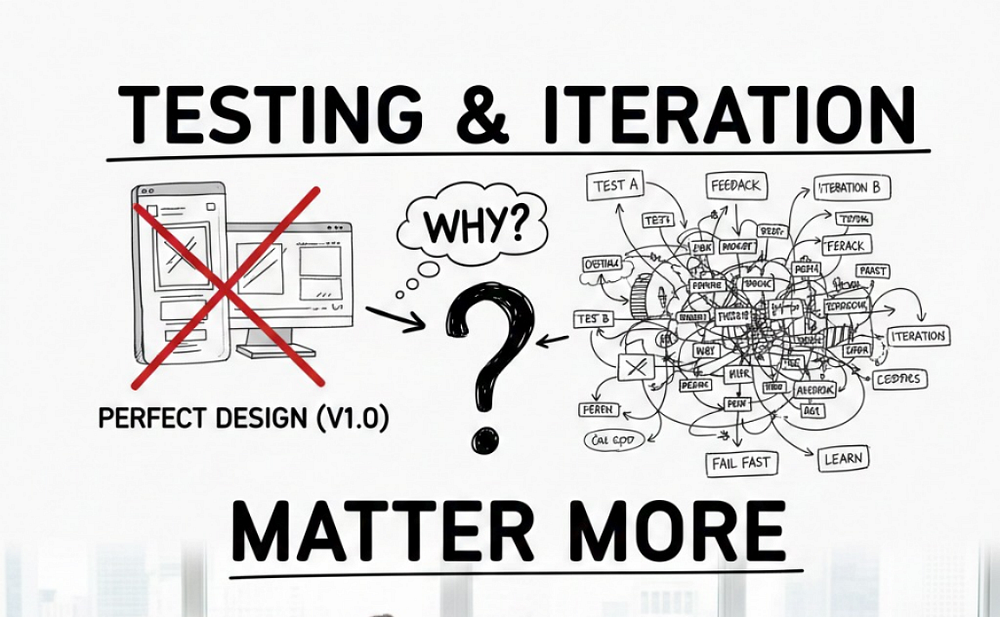
At NASA HERC 2025, Team Mushak did not learn the most from designs that worked immediately. We learned the most from the ones that didn’t.
Testing has a way of exposing reality. It removes assumptions and replaces them with evidence. A design that looks complete on paper behaves very differently once it meets uneven terrain, repeated motion, and time pressure.
NASA HERC taught us that perfection is an idea. Iteration is a process.
The Illusion of a Finished Design
Before testing begins, designs often feel complete. Dimensions are fixed. Components are mounted. Systems are connected. On paper, everything seems ready.
The first test rarely agrees.
A rover may move, but not smoothly. It may turn, but inconsistently. It may complete a task once, but fail on the next attempt. These early tests reveal gaps between intention and behaviour.
NASA HERC 2025 showed us that no design is finished until it has been tested repeatedly.
Terrain Changes Everything
One of the biggest lessons came from terrain testing.
Flat surfaces hide problems. Slopes, gravel, and uneven features expose them. During testing, we observed how small changes in terrain affected balance, traction, and control. A surface that looked manageable on one run could behave very differently the next time.
This forced us to stop designing for ideal conditions. Instead, we learned to design for variation.
Testing on realistic terrain taught us more in a few hours than days of planning ever could.
Failure Points Tell the Full Story
Not every issue appears immediately. Some problems only show up after repeated use.
Fasteners loosen. Alignments shift. Controls drift. These are not dramatic failures, but they are the ones that matter most. They affect consistency and confidence.
At NASA HERC 2025, identifying these quiet failure points became a critical part of improvement. Each issue told us something about our design assumptions.
Instead of asking why something failed, we learned to ask why it failed in that specific way.
Iteration Is More Than Fixing Errors
Iteration is often misunderstood as correcting mistakes. In reality, it is about refining understanding.
After each test, we adjusted one thing at a time. We observed results carefully. When improvements worked, we kept them. When they didn’t, we reversed them.
This slow approach felt frustrating at first. But it helped us avoid creating new problems while trying to solve old ones.
NASA HERC rewarded patient iteration, not rushed change.
Testing Builds Operator Confidence
Testing does not only improve the rover. It improves the team.
Repeated testing allowed operators to understand the rover’s behaviour. They learned its limits. They learned how it responded under pressure. That familiarity mattered during competition runs.
A predictable rover is easier to operate than a powerful one. Confidence comes from consistency, not surprise.
Data Turns Observations into Decisions
During testing, observations alone are not enough. Patterns matter.
NASA HERC 2025 showed us the value of tracking performance over time. How behaviour changed after adjustments. How repeat tests compared. How systems behaved near their limits.
This data-driven approach helped move decisions away from guesswork. It replaced opinions with evidence.
That shift changed how we approached every improvement.
Why Perfect Designs Don’t Exist
Engineering students often aim for perfect designs. NASA HERC makes it clear that perfection is unrealistic.
Conditions change. Systems age. Unexpected interactions happen. No design survives unchanged once testing begins.
What matters is not how good the design looks initially. What matters is how well it adapts.
Testing exposes imperfection. Iteration turns that exposure into progress.
Lessons We Carry Forward
From NASA HERC 2025, Team Mushak learned to value testing time as much as build time. We learned that early issues are useful. We learned that refinement comes from understanding, not guessing.
Most importantly, we learned that good engineering is never rushed.
Looking Ahead
Testing and iteration will continue to guide how Team Mushak prepares for NASA HERC 2026. We approach every design knowing it will change and every test knowing it will teach us something new.
Engineering grows through iteration, not ideal designs.
This is Team Mushak.
Learning through challenges.
Building through iteration.
And preparing, one step at a time, for NASA HERC 2026
TO SEE OUR JOURNEY YOU GUYS CAN STAY TUNED WITH US ON
1. YouTube: https://youtube.com/@teammushak?si=pyRJ3G6mEWIp_YXz
2. Instagram: https://www.instagram.com/teammushak?igsh=cDBmYmZxdGoyZGwz
3. LinkedIn: linkedin.com/in/team-mushak
4. Twitter https://x.com/mushak_herc


Comments
Post a Comment