How Team Mushak Approaches Safety, Planning, and Reliability
How Team Mushak Approaches Safety, Planning, and Reliability
Preparedness is engineered long before competition day.
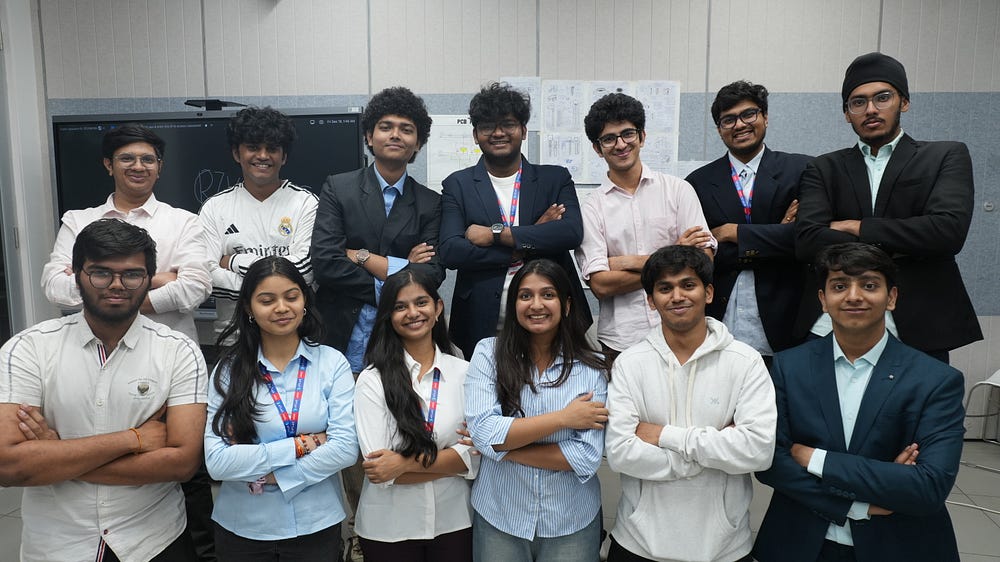
In NASA HERC, performance alone is not enough. A rover that moves well but lacks discipline behind its design, planning, and safety philosophy is incomplete. The Operational Readiness Review evaluates more than capability — it evaluates responsibility.
For Team Mushak, safety, planning, and reliability are not separate themes. They are interdependent pillars that define our preparation for NASA HERC 2026.
This season, we have approached them as core design requirements, not secondary considerations.
Safety as a Foundational Requirement
Safety begins at the conceptual stage.
When structural decisions are made, we consider load paths, stress concentrations, and predictable behavior under obstacle conditions. Edges are evaluated. Fastening methods are reviewed. Stability is assessed beyond static assumptions.
Electrical systems are built with layered protection in mind. Power distribution is organized and secured. Wiring is routed intentionally to reduce wear and accidental exposure. Battery placement considers insulation, enclosure integrity, and thermal behavior.
Software also plays a role in safety enforcement. Motion control logic ensures speed limits are respected. Sudden acceleration or unpredictable responses are mitigated through controlled programming. Autonomous task execution is designed to function consistently and within defined limits.
We do not treat safety as compliance to satisfy review criteria. We treat it as a design philosophy that reduces uncertainty and protects both operators and systems.
Planning as Risk Management
Strong planning minimizes reactive decision-making.
Our approach begins with early identification of major deadlines, subsystem milestones, and integration checkpoints. Rather than progressing in isolation, departments align schedules to ensure coordination before physical integration begins.
Planning extends beyond scheduling. It includes risk anticipation.
Critical components are identified early. Dependencies between systems are mapped. Testing windows are protected so that refinement can occur without compression. Documentation development runs parallel to engineering progress rather than trailing behind it.
This structured planning reduces last-minute uncertainty and allows adjustments to occur with clarity.
NASA HERC values preparedness. Preparedness requires foresight.
Reliability Through Testing and Iteration
Reliability cannot be declared. It must be demonstrated.
Testing is integrated throughout our development cycle rather than reserved for final validation. Individual subsystems are evaluated before integration, and integrated testing reveals cross-system dependencies that isolated trials cannot expose.
Terrain simulation, vibration exposure, repeated task execution, and electrical load observations generate real performance data. Failures are documented and analyzed. Improvements are implemented methodically.
Reliability grows from repetition.
A single successful test does not prove readiness. Consistent behavior across repeated trials builds confidence.
This mindset ensures that performance is not situational, but dependable.
Documentation and Accountability
Professional engineering requires traceability.
Design decisions are recorded. Testing observations are documented. Risk analyses are discussed openly and logged for review. Safety considerations are embedded into procedural documentation rather than implied.
This documentation discipline supports transparency and continuous improvement.
Operational readiness is not a claim. It is a documented state.
Team Alignment and Leadership
Safety, planning, and reliability require cultural alignment within the team.
Departments communicate regularly to avoid isolated assumptions. Adjustments are discussed collectively before implementation. Role clarity ensures accountability without confusion.
Strong leadership ensures consistency. Expectations are defined early. Standards are reinforced continuously. Preparedness is measured not only by technical progress, but by procedural maturity.
Reliability is both mechanical and organizational.
What Operational Readiness Means to Us
Operational readiness is not simply the ability to compete. It is the ability to do so responsibly, predictably, and professionally.
For Team Mushak, this means:
Building systems that behave as expected.
Planning schedules that allow refinement instead of reaction.
Testing repeatedly until performance becomes consistent.
Documenting processes transparently.
Maintaining safety as a continuous priority.
ORR is not a formality for us. It is validation that our preparation reflects discipline.
In NASA HERC, engineering skill is visible on the course.
But preparedness is visible in the review room.
By treating safety as foundational, planning as strategic risk management, and reliability as data-backed consistency, Team Mushak approaches NASA HERC 2026 with structure and accountability.
A rover can complete obstacles.
A prepared team earns trust.
And trust is the true measure of readiness.
This is Team Mushak.
Learning through challenges.
Building through iteration.
And preparing, one step at a time, for NASA HERC 2026
TO SEE OUR JOURNEY YOU GUYS CAN STAY TUNED WITH US ON
1. YouTube: https://youtube.com/@teammushak?si=pyRJ3G6mEWIp_YXz
2. Instagram: https://www.instagram.com/teammushak?igsh=cDBmYmZxdGoyZGwz
3. LinkedIn: linkedin.com/in/team-mushak
4. Twitter: https://x.com/mushak_herc
5. Blogger: https://teammushak.blogspot.com/2026/01/the-vision-behind-team-mushak.html
6.Medium: https://medium.com/@team.mushak/key-design-lessons-from-nasa-herc-2025-6a7c83a2ee73


Comments
Post a Comment