Project Planning in NASA HERC: Turning Ideas into Timelines
Project Planning in NASA HERC: Turning Ideas into Timelines
Great rovers aren’t just engineered — they’re scheduled.
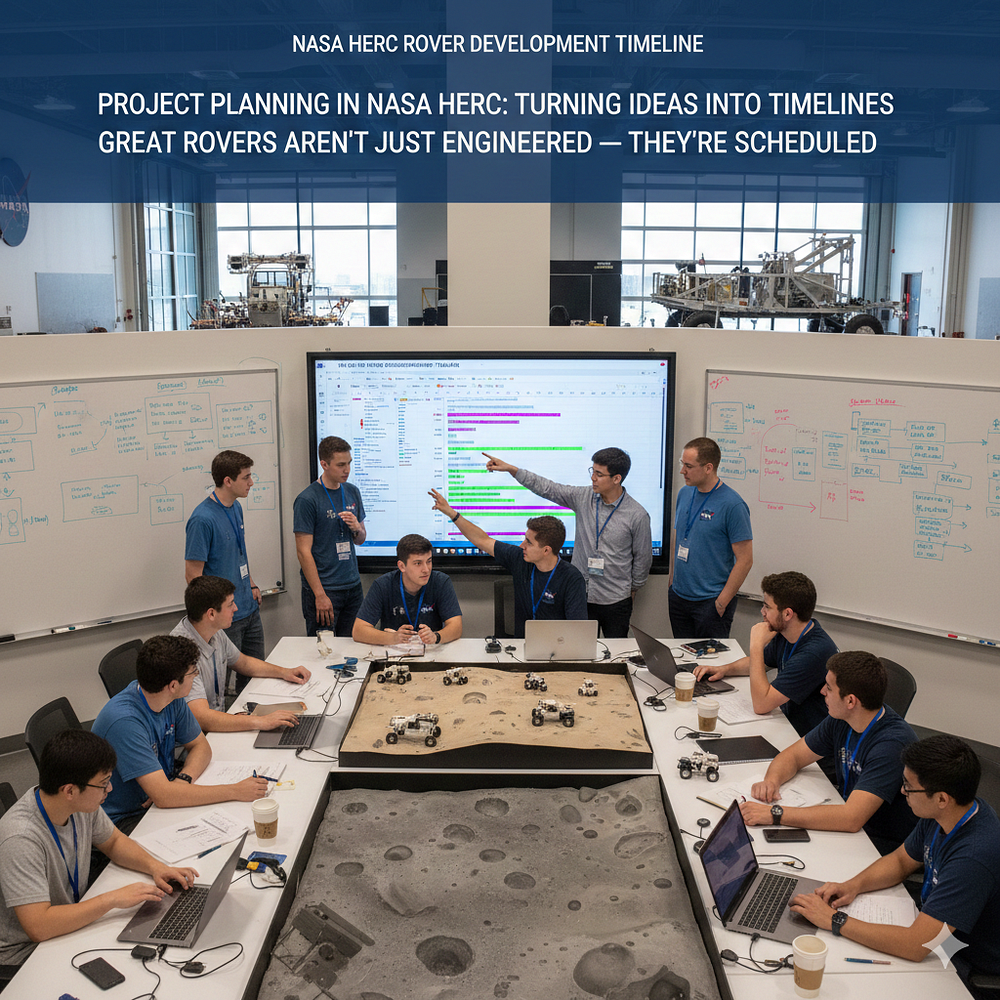
When people think about NASA HERC, they picture CAD models, testing sessions, and obstacle runs. What often goes unnoticed is the invisible framework holding everything together: project planning. Before a single component is manufactured or tested, there is a timeline. Before a rover rolls, there are milestones. Behind every system integration is a deadline that was met — not accidentally, but intentionally.
In NASA HERC, engineering alone is not enough. Time management is engineering.
From Vision to Structure
Every NASA HERC season begins with ambition. Teams brainstorm new ideas, identify improvements from the previous year, and aim higher than before. But ambition without structure quickly becomes chaos.
Project planning transforms vision into structure. It breaks one large, intimidating goal — building a competition-ready rover — into manageable phases. Concept development. Design finalization. Procurement. Assembly. Testing. Documentation. Outreach. Review submissions.
Each phase becomes a measurable target. Instead of asking, “Are we ready?” the team asks, “Have we completed this milestone?”
That shift changes everything.
Building the Timeline Backwards
One of the most critical aspects of NASA HERC planning is deadline awareness. Major submissions such as design reviews and operational readiness reviews come with fixed dates. Competition day itself is immovable.
Team Mushak plans backwards from these deadlines.
If the rover needs to be fully tested before submission, then manufacturing must be completed earlier. If manufacturing must be completed earlier, designs must be frozen even before that. If designs must be frozen, decision-making windows cannot stretch indefinitely.
Working backwards reveals the real pace required.
This method prevents last-minute pressure and forces early accountability.
Milestones Create Momentum
Milestones are more than calendar marks. They are psychological anchors.
Small wins matter. Completing subsystem designs on time builds confidence. Finishing a prototype validates progress. Achieving the first full-system test strengthens team morale.
Without milestones, projects feel endless. With milestones, progress becomes visible.
NASA HERC seasons are long, and energy can fluctuate. Clear checkpoints allow the team to regain focus regularly and measure advancement objectively rather than emotionally.
Coordination Across Departments
Project planning in NASA HERC is not linear. Mechanical decisions influence electrical layouts. Electrical configurations affect software requirements. Software constraints impact mechanical adjustments.
This interdependence means planning must include coordination.
Schedules are not created in isolation. Dependencies are mapped. Buffer periods are included where integration may cause delays. Communication channels remain clear so that small changes do not cascade into timeline disruptions.
Strong planning prevents bottlenecks.
Rather than departments working in parallel confusion, they move in coordinated progression.
Managing Deadlines Without Panic
Deadlines can create pressure, but they should not create panic.
The key difference lies in preparation.
When planning is realistic and progress is tracked honestly, approaching deadlines feel like confirmations rather than crises. Adjustments are made early, not at the final hour. Risks are identified proactively instead of reactively.
This approach turns deadline management into a steady discipline rather than a last-minute scramble.
In NASA HERC, consistency beats intensity.
Documentation and Professionalism
Project planning does not only affect rover performance. It reflects professionalism.
Design reviews, safety reviews, operational documentation, and outreach reporting all require structured timelines. Written submissions must align with build progress. Testing must generate data before it is needed for reports.
A well-planned project ensures that documentation is supported by evidence rather than assumptions.
Planning becomes proof of readiness.
Leadership Behind the Timeline
Strong planning requires oversight, adaptability, and clarity. It requires someone who sees the bigger picture while managing daily progress.
Project Manager Shout-Out
A huge recognition goes to Tanmay Tekale, Project Manager of Team Mushak 2026.

His leadership ensures that ideas do not remain ideas. By structuring timelines, defining milestones, tracking progress, and keeping departments aligned, Tanmay transforms ambition into coordinated execution.
Project management is not about controlling people. It is about aligning effort. Under his guidance, Team Mushak moves forward with direction rather than confusion.
Because in a competition like NASA HERC, time is as valuable as technology.
Closing Thought
NASA HERC tests more than engineering capability. It tests organization, discipline, and readiness.
A rover may win obstacles through physics and design.
But it reaches the field through planning.
Turning ideas into timelines is what makes innovation possible.
And in NASA HERC, every successful launch begins with a calendar.
This is Team Mushak.
Learning through challenges.
Building through iteration.
And preparing, one step at a time, for NASA HERC 2026
TO SEE OUR JOURNEY YOU GUYS CAN STAY TUNED WITH US ON
1. YouTube: https://youtube.com/@teammushak?si=pyRJ3G6mEWIp_YXz
2. Instagram: https://www.instagram.com/teammushak?igsh=cDBmYmZxdGoyZGwz
3. LinkedIn: linkedin.com/in/team-mushak
4. Twitter: https://x.com/mushak_herc
5. Blogger: https://teammushak.blogspot.com/2026/01/the-vision-behind-team-mushak.html
6.Medium: https://medium.com/@team.mushak/key-design-lessons-from-nasa-herc-2025-6a7c83a2ee73


Comments
Post a Comment