Why STEM Outreach Matters in NASA HERC
Why STEM Outreach Matters in NASA HERC
Because exploration means nothing if knowledge doesn’t travel with it.
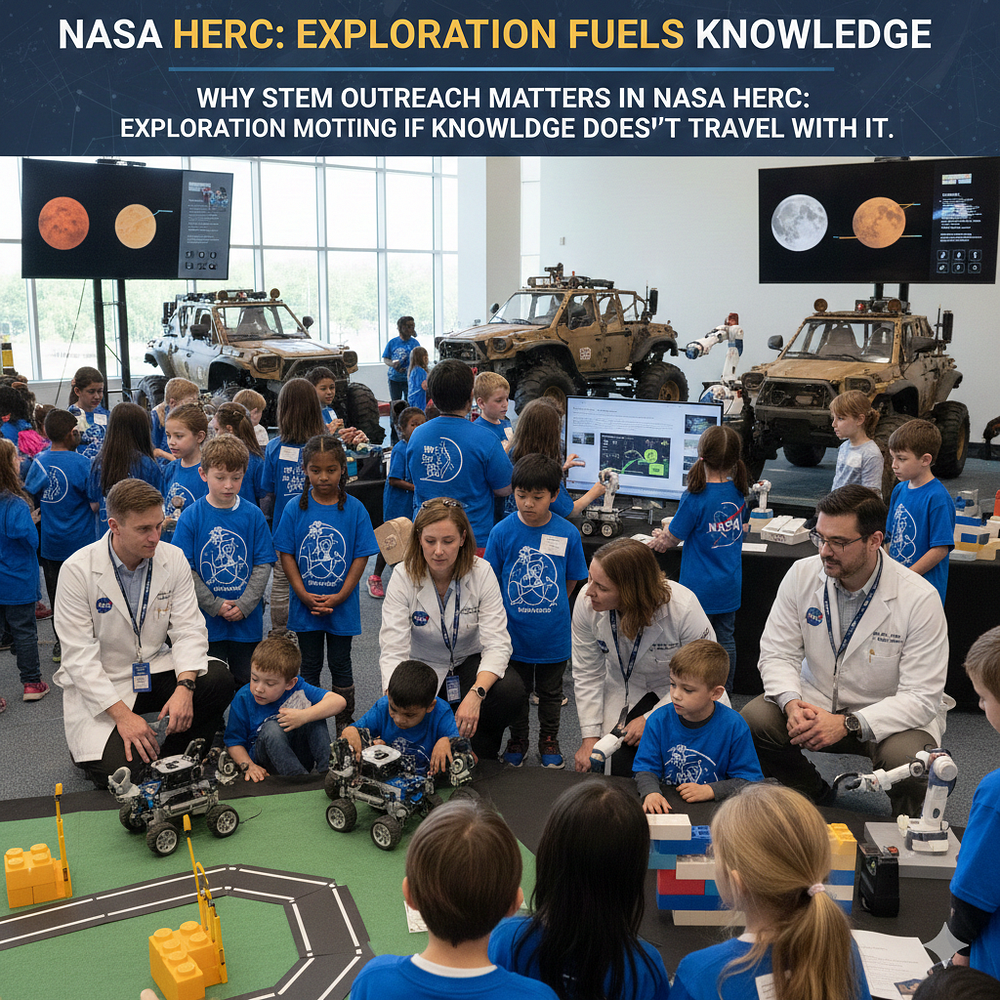
NASA HERC is often understood as an engineering competition. Teams design, build, and test rovers that simulate real exploration challenges. But beneath the hardware, the challenge carries a deeper responsibility. NASA HERC is not just about what a team builds. It is also about what a team gives back.
This is where STEM outreach becomes essential.
NASA’s vision has always gone beyond exploration for its own sake. It is about inspiring the next generation of problem solvers. NASA HERC reflects that philosophy by encouraging teams to step outside their workshops and into classrooms, communities, and conversations where curiosity is just beginning.
For Team Mushak, STEM outreach is not an obligation. It is a core part of why we compete.
STEM Outreach as an Extension of the Rover
A rover represents learning made tangible. But if that learning remains confined within a team, its impact is limited.
STEM outreach allows the ideas behind the rover to travel further than the competition field. It turns engineering concepts into shared experiences and makes STEM feel accessible rather than distant.
When students see something built by people close to their age, the idea of becoming an engineer stops feeling abstract. It becomes achievable.
This is the power of outreach in NASA HERC.
What NASA HERC Looks For in Outreach
NASA HERC values outreach because it reflects real-world engineering responsibility.
Engineers do not work in isolation. They communicate, educate, and inspire. Outreach demonstrates:
Communication ability,Social responsibility,Long-term impact beyond competition
More importantly, it shows that teams understand NASA’s larger mission: exploration that benefits humanity.
STEM outreach is not measured by scale alone. It is measured by intention, effort, and consistency.
Team Mushak’s Approach to STEM Engagement
Team Mushak’s outreach efforts are built around one guiding principle: make STEM approachable.
We focus on engagement rather than lectures. Hands-on activities instead of one-way teaching. Curiosity instead of intimidation.
Over time, this approach shaped the kind of events we conduct and the audiences we reach.
School and Community Engagements
Team Mushak has conducted multiple STEM engagement events across schools and community spaces, reaching students from kindergarten to high school.
These sessions were designed to meet students at their level:
- Younger students explored creativity through simple engineering tasks like building tall structures using everyday materials
- Older students were introduced to concepts of design thinking, problem-solving, and teamwork
Rather than presenting finished answers, we encouraged students to experiment, fail, and try again — the same process we follow in NASA HERC.
Hands-On STEM Activities
Many of our outreach sessions were activity-based.
Students worked with:
- Popsicle sticks and clay to understand structural balance
- Simple materials to explore stability, height, and strength
- Interactive discussions around how engineers solve real problems
These activities transformed abstract ideas into something tangible. When students could touch, build, and break their own designs, learning became natural and memorable.
Introducing Engineering Through Storytelling
Beyond activities, storytelling played an important role in our outreach.
By sharing our journey in NASA HERC — the challenges, failures, and learning moments — students saw that engineering is not about perfection. It is about persistence.
This honesty made STEM feel human.
We were not experts delivering answers. We were learners sharing a path.
Why Outreach Strengthens Teams Too
STEM outreach doesn’t just benefit the audience. It strengthens the team itself.
Explaining concepts forces clarity. Answering questions builds confidence. Working with diverse age groups improves communication skills.
For Team Mushak, outreach sharpened our understanding of fundamentals and reminded us why we started this journey in the first place.
Teaching reinforced learning.
Leadership Behind the Outreach Effort
Strong outreach requires strong organization and leadership.
Team Mushak’s STEM initiatives have been led and coordinated by a dedicated group who ensured that every event had purpose and structure.
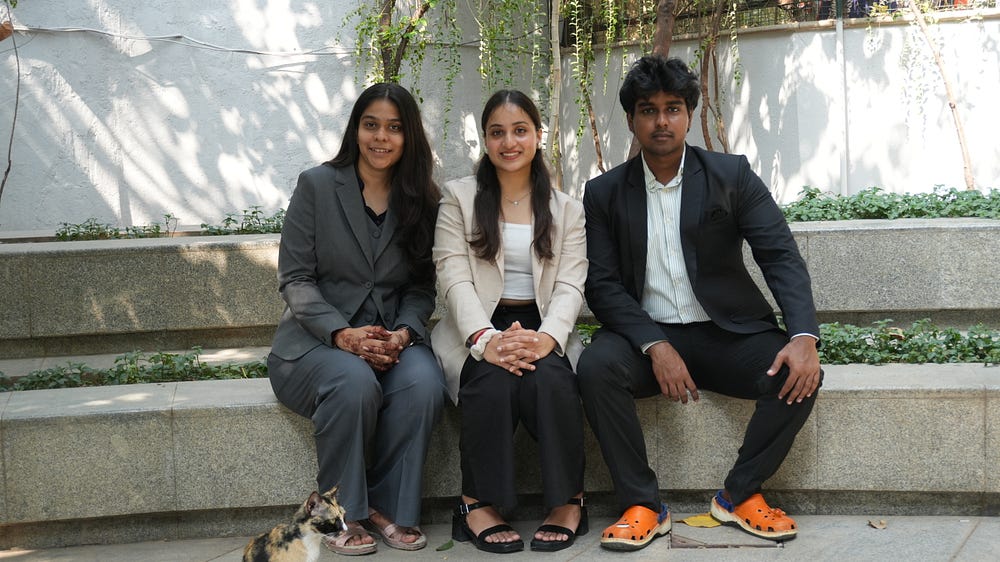
- Prisha Tiwari, STEM Lead
- Vedant Shetty, STEM Manager
- Harshita Gorasiya, STEM Coordinator
Their efforts shaped how Team Mushak connects with communities and represents NASA HERC beyond the competition. From planning events to engaging with students on the ground, their work reflects the true spirit of STEM outreach.
This impact exists because of their leadership.
As Team Mushak prepares for NASA HERC 2026, STEM outreach remains a priority. Each interaction plants a seed. Some grow into curiosity. Others into ambition. A few may grow into future engineers.
NASA HERC gives teams an opportunity to build rovers.
STEM outreach gives them a chance to build futures.
And that may be the most important engineering work of all.
This is Team Mushak.
Learning through challenges.
Building through iteration.
And preparing, one step at a time, for NASA HERC 2026
TO SEE OUR JOURNEY YOU GUYS CAN STAY TUNED WITH US ON
1. YouTube: https://youtube.com/@teammushak?si=pyRJ3G6mEWIp_YXz
2. Instagram: https://www.instagram.com/teammushak?igsh=cDBmYmZxdGoyZGwz
3. LinkedIn: linkedin.com/in/team-mushak
4. Twitter: https://x.com/mushak_herc
5. Blogger: https://teammushak.blogspot.com/2026/01/the-vision-behind-team-mushak.html
6.Medium: https://medium.com/@team.mushak/key-design-lessons-from-nasa-herc-2025-6a7c83a2ee73


Comments
Post a Comment